A Leading Paediatric NDIS Provider in Sydney’s South West
Founded over 12 years ago, this organisation is one of Sydney’s most established paediatric NDIS therapy providers. Serving families across South West Sydney and beyond, they operate with a team of approximately 24 staff — 19 in clinical roles.
This is not a typical allied health clinic. A dedicated Marketing & Communications Manager, Head of People & Operations, 3 receptionists, 7,280 Facebook followers, a branded product shop, and a community home program all point to a high-volume, professionally marketed operation generating significantly more inbound enquiries than a standard practice.
Despite this infrastructure, the nature of NDIS paediatric therapy — complex onboarding, multi-step intake, and families navigating unfamiliar systems — creates predictable and costly gaps in the enquiry-to-booking pipeline.
When the Process Fails the Family
Our investigation found that responses to phone calls and emails were only made during business hours, leaving a complete gap in after-hours enquiry handling. A deeper issue emerged, however: even when staff were available, the complexity of the intake process was creating friction and confusion for families — particularly those from non-English-speaking backgrounds.
A Google review from a family seeking physiotherapy for elderly parents with poor mobility illustrates the problem in detail:
“I am looking for a Chinese speaking physiotherapist for my parents with poor mobility near Riverwood area on 1 September, 2023. The clinic staff told me the physiotherapist can speak Chinese. I explained my parents’ condition. And she told me it’s better to see a GP first to have referral letters, then come back to book an appointment.
On September 6th, I called the clinic to book an appointment. The staff told me to submit an online application form to let the physio better know about my parents’ condition. When I submitted the form online, I noticed there are many questions about children, so I asked the staff whether the physio only saw children, but the staff said no. Then she told me to wait for the physio’s response.
No response until September 11th. I called again to follow up. The staff told me the physio didn’t work that day and she would leave a message.
No response until September 18th. I called again. The staff told me I could call back the next day at 9am or 2:40pm when the physio would be available.
So I called at 9am on September 19th. The staff told me she was in a meeting. I explained the whole story. After putting me on hold, the staff told me the physio won’t accept new patients because she is fully booked. She could only offer a one-off appointment the following week. WHAT!!!!!!!”
This review captures 18 days of repeated follow-up across 4 separate phone calls — ultimately resulting in the family being turned away. It reveals multiple compounding failures in the enquiry handling process:
Gaps Identified
- Adult intake form indistinguishable from the paediatric form — causing confusion and incorrect expectations
- No immediate clarification of the clinic’s paediatric-only specialisation at initial contact
- 5-day gap between form submission and first follow-up attempt
- Practitioner-dependent callbacks with no automated fallback
- No language-specific pathway for non-English-speaking families despite advertising Chinese-speaking staff
- Fully booked status not communicated until the 4th contact attempt, 18 days later
Estimated Monthly Enquiry Volume
This organisation’s NDIS-heavy, paediatric-focused model generates enquiries very differently to a standard physio clinic. Multiple inbound channels — phone, web, social, NDIS referrals, and school screener requests — all funnel through the same small admin team:
| Enquiry Channel | Est. Monthly Volume | Notes |
|---|---|---|
| Phone calls | 150–220 | 3 receptionists; NDIS families often call multiple times per onboarding |
| Website contact form / email | 40–70 | Active SEO across multiple suburb keywords |
| NDIS referrals (plan managers, support coordinators) | 30–60 | High for a registered provider of this size |
| School screener enquiries | 10–20 | Separate service line generating distinct leads |
| Social media DMs (Facebook 7K+ followers) | 15–30 | High follower count drives active inbound DMs |
| Online booking / self-serve | 20–40 | "Book Now" CTA prominent on site |
| Total estimated monthly enquiries | ~265–440 |
A mid-point of ~320–360 enquiries/month is well-supported given team size, social following, and multi-service NDIS profile.
Where Enquiries Are Leaking
| Leakage Point | Rate | Est. Lost/Month |
|---|---|---|
| Calls missed during business hours (all 3 receptionists simultaneously busy) | 20–30% of ~185 calls | 37–55 calls |
| Of those missed: callers who don’t call back or leave no message | ~62% | 23–34 lost |
| After-hours calls (Level 4 office; no after-hours service visible) | ~100% after hours | 10–20 calls |
| Website/form enquiries not followed up within 5 minutes | 30–40% | 12–28 |
| Social media DMs not answered within business hours | 40–60% | 6–18 |
| NDIS complex enquiries dropping off during intake | 15–25% of NDIS referrals | 7–15 |
| Total estimated missed/unactioned per month | — | ~58–115 |
Why the NDIS changes the numbers dramatically
Unlike a standard allied health clinic where a lost enquiry represents one or two sessions, a missed NDIS paediatric client represents $8,000–$15,000 in year-one therapy revenue. Losing even 25–40 clients per month at that value produces a revenue leakage that most practices simply don’t have visibility into — because no one is tracking the enquiries that never became bookings.
An AI Assistant That Speaks Every Family’s Language
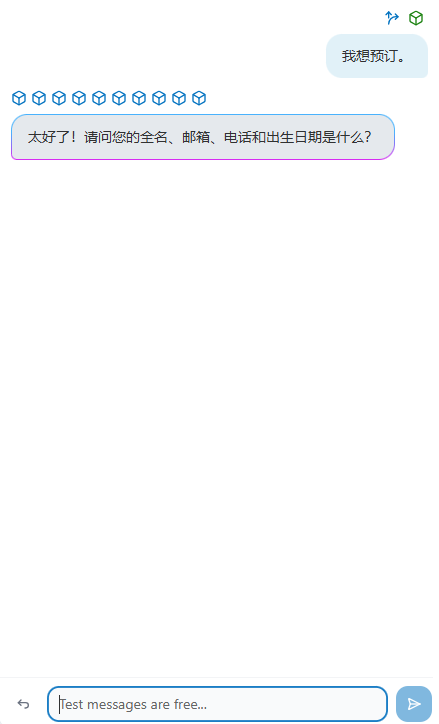
The issues identified here are resolved by AI Fox’s standard online assistant — with one critical additional capability: multilingual support.
In Ashley Ann’s case, the confusion began at the intake form: a paediatric form presented to an adult enquiry, with no real-time guidance and no Chinese-language pathway despite the clinic advertising Chinese-speaking staff. The AI Fox assistant addresses this directly:
What the AI Fox System Delivers
- 24/7 enquiry response — no more 18-day waits for a callback
- Multilingual support including Mandarin/Cantonese, immediately routing families to the right pathway
- Conversational intake: walks families through the form step-by-step, clarifying paediatric vs adult services upfront
- Instant availability check — families are told immediately if a practitioner is fully booked, with alternative options offered
- NDIS-specific FAQ handling: plan management, funding categories, referral requirements
- After-hours booking directly into the scheduling system (Nookal/Cliniko/HotDoc)
- Social media DM integration — responds to Facebook and Instagram enquiries automatically
- School screener enquiry routing as a separate, dedicated intake stream
The voice solution adds a further dimension: AI callers using the voices of the clinic’s own team members to follow up missed calls — creating a personal, consistent experience even when all three receptionists are occupied.

400x Return on a $1,000/Month Retainer
At this organisation’s scale and with NDIS client values of $8,000–$15,000 per year, the revenue arithmetic is compelling:
Beyond the revenue numbers, AI Fox eliminates the specific failure mode that produced Ashley Ann’s review: a family spending 18 days, four phone calls, and significant emotional effort — only to be turned away. With an AI assistant in place, that family would have received accurate service information within 60 seconds of their first contact, in their preferred language.
Scale Creates Complexity — AI Resolves It
This organisation’s challenges aren’t the result of poor service or understaffing. They’re the predictable consequence of high volume, complex NDIS intake processes, and a diverse community of families navigating an unfamiliar system — without the tools to handle all of it simultaneously.
The irony is that the organisation’s own strengths — their strong marketing, large social following, ISO certification, and multi-service profile — generate more enquiries than any three-receptionist team can manually triage at the speed families expect.
For a $1,000/month retainer, AI Fox resolves this entirely: 24/7 response, multilingual intake, instant availability, and a seamless path from first contact to booked appointment — delivering an estimated 400x ROI from the very first month.